
 EN
EN
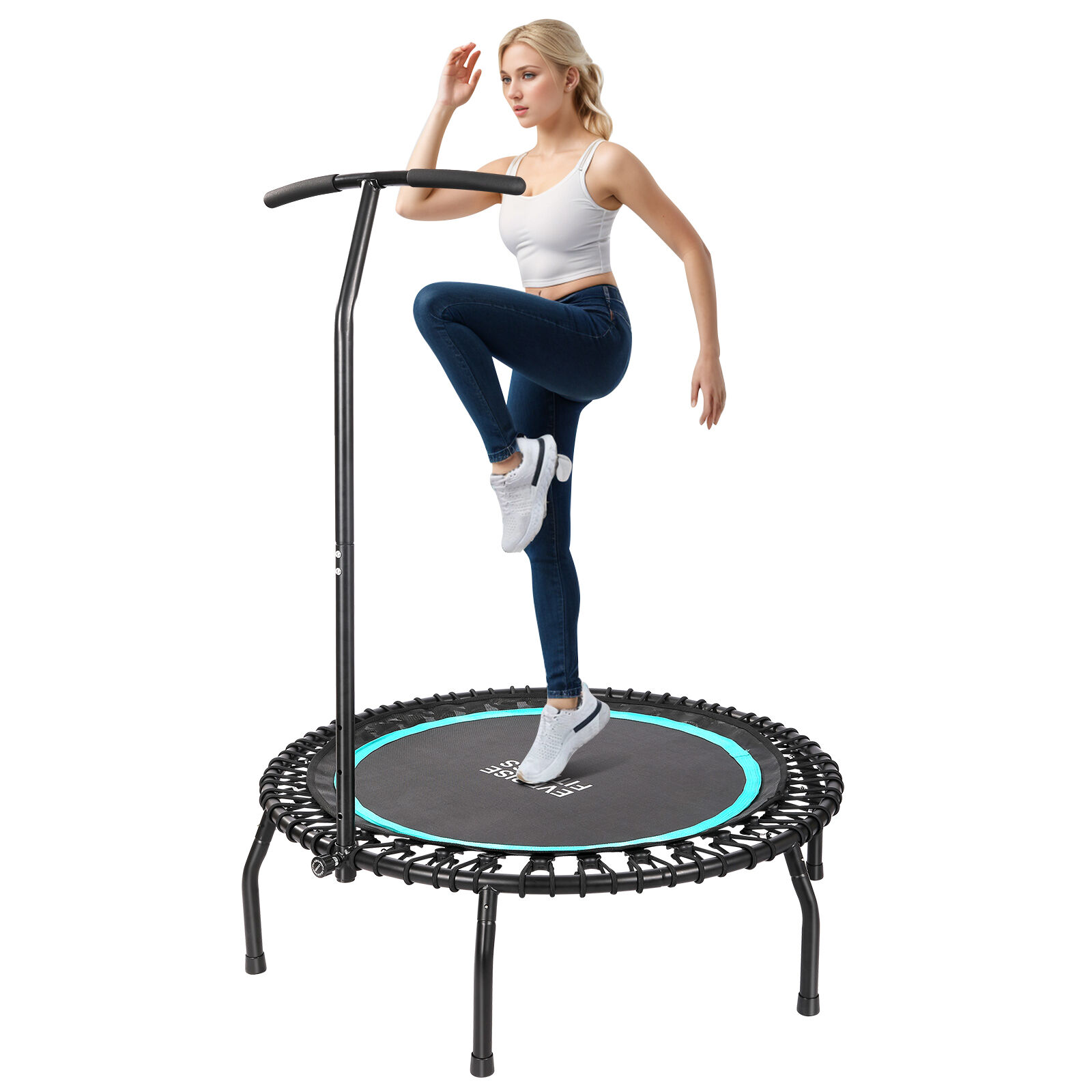
Science-Backed Health Benefits of Yoga Trampolines
Low-Impact Cardio and Joint-Safe Neuromuscular Activation
Doing yoga on a trampoline gives good cardio benefits without hurting the joints. The bouncy surface takes away about 80% of the impact that would normally hit hard floors. NASA actually did some research on gravity and how it affects tissues, which supports this claim. That makes these trampolines great for people who suffer from arthritis, sensitive joints, or those with limited mobility. Traditional high impact exercises are different because they don't engage those deeper stabilizing muscles as much. When bouncing around on a trampoline, our bodies constantly make tiny adjustments, which helps improve coordination between muscles and nerves without putting extra strain on knees, hips or ankles. According to studies by the American Council on Exercise, just ten minutes on a trampoline burns roughly the same amount of calories as thirty minutes running. This means anyone looking for effective yet gentle exercise can find something that works for their fitness level.
Enhanced Balance, Proprioception, and Core Engagement Through Dynamic Stability
Yoga rebounders are inherently unstable little buggers that force the core muscles to stay constantly engaged just to keep someone from falling off while moving between positions. People who stick with regular sessions on these devices tend to notice better body awareness over time. Research published in reputable balance journals actually shows around a 34% improvement in proprioception after practicing consistently for about two months straight. What makes rebounder workouts different from traditional floor yoga is how the gentle bounce disrupts balance during pose transitions. This subtle instability works those deep abs and back stabilizing muscles much harder than most people realize when doing standard mat exercises. The extra strength gained from this kind of training translates into real world benefits too, helping prevent injuries during daily activities where sudden shifts happen without warning.
Mental Health Benefits: Stress Reduction and Neurochemical Response to Rebounding
Bouncing on a trampoline actually changes what's happening in our brains in ways that boost mental health. The up and down movement helps move lymph fluid around the body and seems to give serotonin levels quite a kick too. Some research from the Journal of Sports Medicine suggests serotonin goes up about 25% during these sessions. Stress hormones start dropping pretty quickly too, usually within just 15 minutes of starting. That's why many people feel so much better after a session. When folks combine the bouncing with focused breathing and conscious movements (which is basically what happens in yoga trampoline classes), they tend to get happier feelings than just sitting still meditating. People who try this often say they feel 40% more relaxed compared to regular yoga on mats, which shows there's something special about combining physical activity with mindfulness practices.
Designing Inclusive Yoga Trampoline Classes for Diverse Audiences
Creating yoga trampoline classes that welcome everyone requires intentional programming grounded in universal design principles. Thoughtful modifications ensure safety, build confidence, and foster long-term engagement-studios adopting accessibility-first approaches report up to 30% higher client retention.
Beginner-Friendly Yoga Rebounder Workouts: Adapting Asanas for Stability and Confidence
Beginners tend to get the most out of simpler versions of exercises that include some kind of support framework, focusing on finding their balance and becoming aware of their bodies. Take Tree Pose on a rebounder for instance. Many newbies find it really helpful to hold onto the frame at first until they feel stable enough to try doing it in the middle of the mat without assistance. Doing gentle bounces instead of full jumps works wonders too. Controlled small movements or sitting while rebounding helps people tune into where their body is in space without putting too much stress on their joints. Teachers often give short reminders like telling students to keep their knees soft, engage their core muscles, and press down firmly through the front part of their feet. These little pointers make all the difference when someone is just starting out, building that muscle memory confidence right from the beginning classes.
Family and Intergenerational Yoga Bounce Programs: Engagement Across Ages
Rebound classes bring people together for fun physical activity across different age groups. Kids love jumping around while developing their sense of rhythm and body control. Older participants often prefer slower movements that help keep blood flowing and joints working smoothly. When partners work together on things like matching bounces or balancing exercises, it creates real bonds between them as they accomplish something together. Studios have started offering special seating arrangements and support equipment so everyone can join in no matter what their mobility level is. These spaces become welcoming places where whole families come out to improve their balance skills, get better at moving together, and form stronger emotional ties through shared exercise experiences.
By embedding universal design into class structure, cueing, and progression pathways, studios position yoga trampolines as versatile tools for lifelong, holistic wellness-serving toddlers, teens, adults, and older adults alike.
Integrating Yoga Trampolines into Your Studio: Strategic Expansion and ROI
Commercial Benefits: Equipment ROI, Space Efficiency, and Class Scheduling Tips
The business case for yoga trampolines is pretty solid actually. Most studios see their initial investment pay off within just 3 to 6 months when they start charging extra for these special bounce-based classes. People are really into them because they want exercise that doesn't hurt their joints but still keeps them engaged physically. The size factor works wonders too. These trampolines are only around 40 to 45 inches across, which means studios can fit three times as many setups in the same amount of floor space compared to regular mats. This makes it possible to run multiple small group sessions at once without needing bigger premises. Smart operators find ways to get even more value out of their equipment throughout the day.
- Peak hours: Offer 30-minute express classes between standard offerings to capture time-crunched clients
- Hybrid slots: Combine rebounder work with mat-based sequencing in extended 75-minute workshops
- Off-peak utilization: Host targeted small-group sessions-such as senior balance or post-rehab conditioning-during lower-traffic windows
For optimal safety and instruction quality, cap class sizes at 8-10 participants. This ensures individualized attention on stability techniques and proper form-key drivers of both client satisfaction and retention.
Safety and Equipment Selection for Yoga Trampolines
Rebounders vs. Full-Size Trampolines: Choosing the Right Equipment for Studio Use
When it comes to yoga classes, nothing beats commercial grade rebounders for the job. These mini trampolines measure under 40 inches across, which makes them ideal for small spaces. A typical 1,000 sq ft studio can actually hold around six to eight of these little guys side by side, compared to just one big trampoline taking up all the room. The bounce on these things stays low too, between 6 and 12 inches high, so there's much less chance of someone falling off while still getting all those therapeutic benefits. What really matters though is how stable they feel underfoot. The surface stays tight and even throughout, giving practitioners solid support when holding weight bearing poses. Big trampolines just don't compare because their surfaces tend to sag unevenly in different spots, making it harder to maintain proper alignment and increasing the risk of injuries when moving from one pose to another.
Key Criteria: Weight Capacity, Surface Tension, and Floor Compatibility
When choosing gear for serious use, look for commercial grade rebounders that can handle at least 250 pounds. This ensures they work for different body sizes and last through regular sessions. The surface tension matters too. Models between 80 to 100 psi give just the right mix of bounce and control needed for those tricky balancing moves. Most good rebounders come with rubber tips on their legs to stop them from scratching floors or sliding around sideways. Wide bases help spread out the weight properly on both vinyl and sprung flooring systems. Don't forget to check how well the rebounder works with whatever floor the studio has. Some places need extra padding under the legs or special adapters to keep everything stable and noise free. Getting these basics right makes all the difference when setting up an accessible, long lasting yoga trampoline program that actually works in real world studios.
Frequently Asked Questions
What are the main benefits of using yoga trampolines?
Yoga trampolines offer several benefits, including low-impact cardio, joint-safe neuromuscular activation, enhanced balance and proprioception, mental health improvements, and inclusive class design for all ages.
Are yoga trampolines suitable for beginners?
Yes, yoga trampolines are suitable for beginners, particularly when classes include adaptations to help stabilize and build confidence. Simple exercises with support frameworks can aid in finding balance and body awareness.
Is there a significant ROI for studios investing in yoga trampolines?
Studios can expect a solid ROI, typically within 3 to 6 months. The small size and appealing bounce-based classes attract many clients, allowing studios to maximize space efficiency and offer added value.
How do yoga rebounders differ from full-size trampolines?
Yoga rebounders are smaller, typically under 40 inches across, with a controlled bounce height. They are designed to provide stable surfaces for holding weight-bearing poses, while big trampolines can be difficult to maintain alignment on and present a higher risk of injury.