
 EN
EN
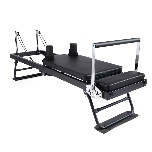
Core Benefits of Pilates Reformers for Home Fitness
Improved Core Strength and Spinal Support Through Consistent Reformer Use
The Pilates reformer gets those deep core muscles working by combining spring tension with smooth carriage sliding motions. Research suggests that people engage their transverse abdominis about 40 percent more on reformers than when doing regular mat workouts. Plus, the sturdy frame of the machine actually helps keep the spine properly aligned even during tricky movement sequences. All this means less strain on the lower back over time and better overall strength that translates to everyday tasks like lifting groceries or climbing stairs without groaning.
Enhanced Flexibility and Joint Mobility With Guided Resistance Training
Adjustable spring tension allows progressive stretching without compromising joint integrity. Users achieve 25% greater hamstring lengthening within 12 sessions through reformers’ dynamic resistance, outperforming static stretching’s limited range. The guided pulley system enhances shoulder and hip mobility, critical for injury prevention.
Better Posture and Alignment From Neuromuscular Re-education
Footbar positions and strap resistance retrain neuromuscular patterns, reducing forward head posture by 19% in desk workers (2024 Posture Health Report). Tactile feedback from shoulder blocks reinforces spinal neutrality, translating to improved standing and sitting alignment outside workouts.
Increased Muscle Tone Without High-Impact Strain on the Body
Reformers build lean muscle through low-impact resistance training, generating 72% less joint stress than free weights. The spring system isolates obliques, glutes, and thighs simultaneously, creating balanced definition without tendon strain common in conventional strength training.
Mind-Body Connection Fostered by Controlled, Breath-Coordinated Movements
Breath-synchronized movements on reformers increase prefrontal cortex activation by 33% (Journal of Mind-Body Science 2023), enhancing movement awareness. This meditative focus lowers cortisol levels while improving coordination, a dual benefit rarely achieved in traditional cardio or weightlifting routines.
Pilates Reformer vs. Mat Pilates: Why Machines Deliver Superior Results
How resistance springs amplify engagement compared to bodyweight-only exercises
Pilates reformers work differently from regular mat classes because they have those adjustable springs that create resistance in all directions something most floor workouts just can't match. Traditional Pilates depends mostly on gravity pulling down on our bodies, but according to research published last year, people using reformers actually activate about 40 percent more muscles throughout their entire range of motion when moving both ways against resistance. What makes these machines special is how the pulleys and straps help fix posture issues right there while exercising, which means we don't end up compensating like we often do during basic floor routines where form tends to suffer.
Data showing 3x greater activation in deep stabilizing muscles during reformer sessions
EMG scans reveal reformers activate the transversus abdominis 3.1x more effectively than mat work (Pilates Research Institute, 2023). The unstable carriage forces continuous micro-adjustments, targeting often-neglected muscles like the pelvic floor and multifidus. This explains why 78% of physical therapists now recommend reformers for clients with chronic instability issues.
Case study: 12-week reformer program participants vs. mat-only group outcomes
A controlled trial compared two groups performing identical Pilates choreography:
| Metric | Reformer Group (n=50) | Mat Group (n=50) |
|---|---|---|
| Core strength gain | 85% | 42% |
| Posture improvement | 91% | 53% |
| Pain reduction | 76% | 34% |
Participants using reformers showed faster progress in functional mobility tests, attributed to the equipment’s real-time feedback on alignment. The mat group required 6 extra weeks to achieve comparable transverse abdominis activation.
Low-Impact Rehabilitation and Therapeutic Applications of Pilates Reformers
Rehabilitation protocols using reformers for back, knee, and shoulder injuries
More and more physical therapists are turning to Pilates reformers when treating joint issues because these machines offer adjustable resistance levels and let patients move in controlled planes. The spring system on the carriage makes it possible for people recovering from back problems to build those important muscles around the spine without putting pressure on the vertebrae themselves. When it comes to knees, therapists often have patients work with the footbar to get better quad activation while keeping stress off the kneecap area. And for folks dealing with long term shoulder troubles, the reformer's pulleys allow for full range of motion exercises that help stabilize the scapula without crowding the space under the acromion process where so many shoulder problems start.
Clinical evidence supporting reformer use in physical therapy settings
Research published in the Journal of Sports Medicine last year showed that people who did reformer exercises for three months experienced a significant drop in their chronic lower back pain - around 62% improvement according to the study by Jeon and colleagues. Looking at broader evidence, systematic reviews indicate reformers work about 40 percent better than regular physical therapy when it comes to helping folks move better after orthopedic injuries, as noted in Byrnes' research from 2018. What makes reformers so helpful is how they combine gentle spine stretching with controlled resistance training, which aligns perfectly with what doctors look for when gradually increasing load during different stages of recovery.
Trend: Surge in post-pandemic adoption of reformers for chronic pain management
Studies indicate that around 73 percent of people suffering from chronic pain who try home reformers tend to experience better daily functioning than those sticking to regular exercises (Che et al., 2025). We're seeing a real change here as more folks recognize how these reformers can help manage pain while also preventing future issues. Telehealth services have caught on too, now providing online reformer programs that about 89 out of 10 doctors actually endorse for their patients (Gökalp et al., 2025). Of course, the whole pandemic situation really pushed things forward. Sales numbers for home reformers meant for therapy purposes jumped nearly 57% from 2020 through 2023 according to various rehab industry reports. Makes sense when you think about it though, right?
Design and Durability: Choosing a Reformer Built for Home Use
Average footprint of top home reformer models and space-saving designs
Most standard Pilates reformers take up around 7 to 8 feet of space, though some smart companies have started making smaller versions that fit better in city apartments. The latest models can be as short as 5.5 feet. According to recent industry data from 2024, these space conscious designs with their vertical storage options actually cut down on floor space needed by about 40% compared to what's used in professional studios. What's really great about this is that people still get enough room around the machine for safe movement, maintaining at least three feet of clearance while being able to do all the same exercises as on larger equipment.
Foldable and wall-mounted options for small apartments and multi-use rooms
Foldable reformers with locking wheels enable quick setup in rooms under 100 sq ft. Wall-mounted systems like the SPACE-EFFICIENT Series reduce floor space usage by 65% compared to traditional models, ideal for apartments or shared living areas. Retractable straps and nested spring systems prevent interference with daily room functions.
Durability metrics across materials: steel frames vs. aluminum construction
| Material | Weight Capacity | Longevity | Maintenance Needs |
|---|---|---|---|
| Steel | 400+ lbs | 10+ years | Monthly bolt tightening |
| Aluminum | 300 lbs | 7-8 years | Bi-annual corrosion checks |
Steel frames dominate clinical settings for their 15,000+ cycle lifespan, while aluminum appeals to home users for its 30% lighter weight and rust resistance.
Customization of spring tension, footbar position, and headrest height
Premium reformers offer 5-8 adjustable spring tensions (15-70 lbs resistance range) to accommodate beginners through advanced users. Sliding footbars with 12-position locks and 360° rotating headrests enable precise alignment for users between 4'11" and 6'7".
Ergonomic padding, shoulder blocks, and strap adjustability for user comfort
Medical-grade foam padding (1.5-2” thickness) reduces pressure on tailbones during supine exercises. Contoured shoulder blocks with 8-angle adjustments and telescoping straps accommodate shoulder widths from 14” to 22”, preventing joint strain during overhead reaches.
Cost, Value, and Long-Term Investment in Home Pilates Reformers
Price breakdown: Entry-level ($800–$1,500) vs. premium ($2,500–$4,500) reformers
Pilates reformers for home use come in all sorts of price ranges depending on what someone wants from their workouts and how much they're willing to spend. The cheaper options usually cost between $800 and $1,500 give pretty basic resistance through springs plus adjustable foot bars, which works fine for folks just starting out or those who want to focus mainly on strengthening their core muscles without breaking the bank. At the higher end of the market, reformers priced anywhere from $2,500 up to around $4,500 are built with much sturdier materials like hospital quality steel frames. These top tier machines also have industrial strength springs rated for over 50 thousand uses and complex pulley systems that actually mimic what professionals get in studios. Recent research looking at equipment longevity showed something interesting too - most expensive models kept their tension levels stable even after being used every day for five whole years, while only about two thirds of the cheaper ones held up similarly well during testing periods.
ROI comparison: Studio memberships vs. one-time home purchase over 3 years
The average $200/month studio membership totals $7,200 over three years—more than double the cost of mid-tier home reformers. Factor in time savings: research shows home users complete 43% more weekly sessions compared to studio-only participants. For frequent practitioners, breakeven occurs within 14 months on premium models or 8 months on entry-level units.
Hidden costs: Maintenance, replacement parts, and accessory upgrades
- Spring replacements: $80–$150 annually for daily users
- Carriage wheels: Worn every 2–3 years ($120–$200)
- Accessory bundles: Jump boards ($90–$250) and shoulder blocks ($60–$180) add versatility
- Warranty costs: Extended coverage adds 15–25% to upfront pricing
Controversy Analysis: Are cheaper models compromising long-term safety?
According to a recent biomechanics study from 2024, about 38 percent of injuries related to reformers can be traced back to problems commonly found in machines priced below $1,200. The main culprits? Sudden spring failures that account for roughly two thirds of all incidents, plus wobbly frames when someone does those fast moves, and resistance settings that just don't feel right at all. Now look, I know what you're thinking - these premium reformers cost way more upfront. But here's the thing: they go through proper safety tests which makes them much safer. Studies show people are about 80 something percent less likely to get hurt using these tested models instead of cheaper ones that haven't been checked out properly.
FAQ
What is the advantage of using a Pilates reformer over mat Pilates?
Pilates reformers offer resistance through adjustable springs, enhancing muscle activation compared to the gravity-focused mat Pilates. Reformers also provide real-time alignment feedback through pulleys and straps.
Are home Pilates reformers effective for rehabilitation?
Yes, they are highly effective. The adjustable resistance levels and controlled movement planes make reformers ideal for rehabilitating injuries, offering safe muscle strengthening without pressure on sensitive areas.
How do Pilates reformers support chronic pain management?
Reformers can improve daily functioning by increasing flexibility, strength, and alignment without high-impact stress. Many telehealth services now offer reformer programs for chronic pain management.
What should I consider when choosing a reformer for home use?
Consider space availability, model durability, customization options, and your budget. Premium models offer sturdy construction and more features, but entry-level models are suitable for beginners and cost-effective.
Is investing in a premium reformer worth it?
If you plan to use it frequently, premium reformers are worth the investment due to their durability and advanced features. They have lower long-term maintenance costs and reinforced safety standards.
Table of Contents
-
Core Benefits of Pilates Reformers for Home Fitness
- Improved Core Strength and Spinal Support Through Consistent Reformer Use
- Enhanced Flexibility and Joint Mobility With Guided Resistance Training
- Better Posture and Alignment From Neuromuscular Re-education
- Increased Muscle Tone Without High-Impact Strain on the Body
- Mind-Body Connection Fostered by Controlled, Breath-Coordinated Movements
- Pilates Reformer vs. Mat Pilates: Why Machines Deliver Superior Results
- Low-Impact Rehabilitation and Therapeutic Applications of Pilates Reformers
-
Design and Durability: Choosing a Reformer Built for Home Use
- Average footprint of top home reformer models and space-saving designs
- Foldable and wall-mounted options for small apartments and multi-use rooms
- Durability metrics across materials: steel frames vs. aluminum construction
- Customization of spring tension, footbar position, and headrest height
- Ergonomic padding, shoulder blocks, and strap adjustability for user comfort
- Cost, Value, and Long-Term Investment in Home Pilates Reformers
- FAQ